India has always had a complicated relationship with its socioeconomic inequalities since it is a country of contrasts and contradictions. On the one hand, the nation has made outstanding progress in recent decades in terms of economic development and expansion. On the other side, there are still millions of individuals who are struggling to make ends meet, like Manas Singh Mahto, a gig worker from Bhubaneswar.
The third film directed by Nandita Das, Zwigato, is a moving and potent depiction of the difficulties of those like Manas who have been marginalized in Hindi cinema and public conversation. It is a movie that shines a light on India’s darker realities, which are sometimes ignored in the name of progress.
The Hidden Cost of the Gig Economy
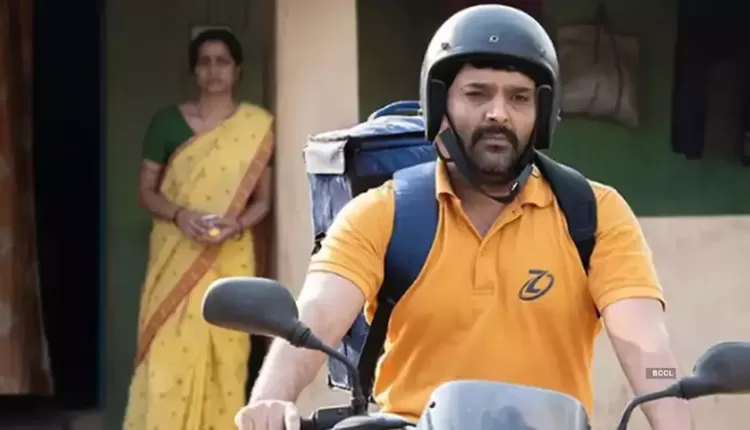
Several Indians, including Manas Singh Mahto (Kapil Sharma) and his wife Pratima (Shahana Goswami), deal with the worries of gig workers on a daily basis. While they deal with the demands of the gig economy and the harsh reality of living in a culture that frequently considers them as disposable commodities, Zwigato portrays their everyday difficulties.
From Manas’ frantic attempts to complete the necessary number of deliveries to obtain the necessary number of stars to Pratima’s disobedient actions of leaving the house to work as a cleaner or occasionally give massages to the affluent, there are many examples of desperate attempts. Zwigato illustrates how precarious their lives are. It highlights the precarious position of gig workers, who are continuously at the whim of the “software” that manages every minute of their waking lives.