India’s Iran Policy Under Scrutiny: Analysts Debate Shifting Stance
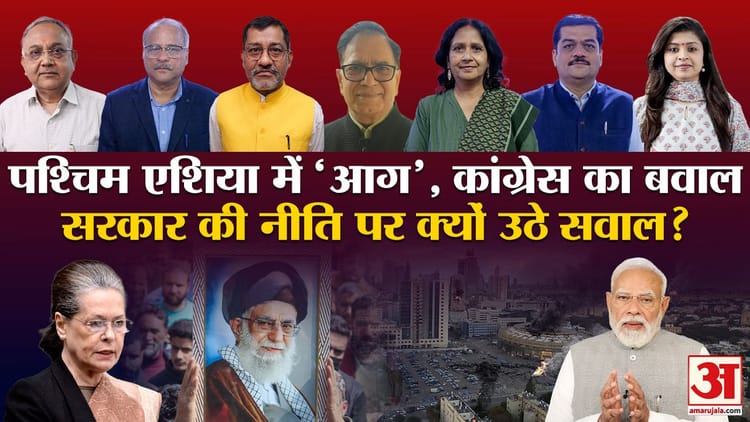
India’s foreign policy is facing intense debate amid the ongoing conflict in West Asia involving Iran. Analysts are examining the nation’s stance, particularly in light of recent events. Experts shared their views on this complex issue.
India’s Foreign Policy: A Balancing Act
Experts discussed India’s long-standing approach to international relations. This approach prioritizes national interests while maintaining autonomy.
Historical Context of India’s Relations
Rakesh Shukla highlighted India’s diverse relationships. “We have relations with everyone,” he stated. This includes Russia, Iran, and the United States. Shukla noted that India has not faced pressure regarding its foreign policy decisions. He emphasized that India’s ties with Iran have historically been commercial, not based on social connections.
Navigating a Changing World Order
J.K. Tripathi explained India’s strategy of engaging with all global blocs. “It has been with everyone based on its national interests,” he said. India has opposed actions by both Hamas and Israel. The country has also voted differently on UN proposals concerning Russia and Ukraine. Tripathi added that India supports peace initiatives. He observed that the old global order is changing, with America’s dominance diminishing.
Focus on National Interest
Avadhesh Kumar questioned India’s deep involvement in the Iran conflict. “That war is neither ours, nor are we fighting there,” he pointed out. Kumar suggested that India’s focus should remain on its own affairs. He noted that Iran has many neighboring Muslim countries, none of which have taken a strong stance. Kumar also mentioned Iran’s past conflicts and its military programs. He stressed the need to adapt foreign policy to changing global circumstances.
Concerns Over India’s Recent Stance
Some analysts expressed concern about recent shifts in India’s foreign policy communication.
Questions on Recent Diplomatic Responses
Purnima Tripathi contrasted India’s response to the Russia-Ukraine war with the current situation. “During the Russia-Ukraine war, our government said from the beginning that we do not support any kind of war,” she recalled. Tripathi questioned the delay in sending a condolence message after Khamenei’s death. She also raised concerns about India appearing to yield to American pressure. “This is not understood. It seems objectionable,” she commented.
Evolution of Diplomacy
Vinod Agnihotri acknowledged that diplomacy evolves with the times. He referenced Nehru’s policy of non-alignment during the Cold War. Agnihotri stated that changes in foreign policy are natural, especially after the fall of the Soviet Union. He praised India’s role in the Ukraine war and the Gaza crisis. However, Agnihotri noted a perceived lack of clarity in India’s current position on Iran.